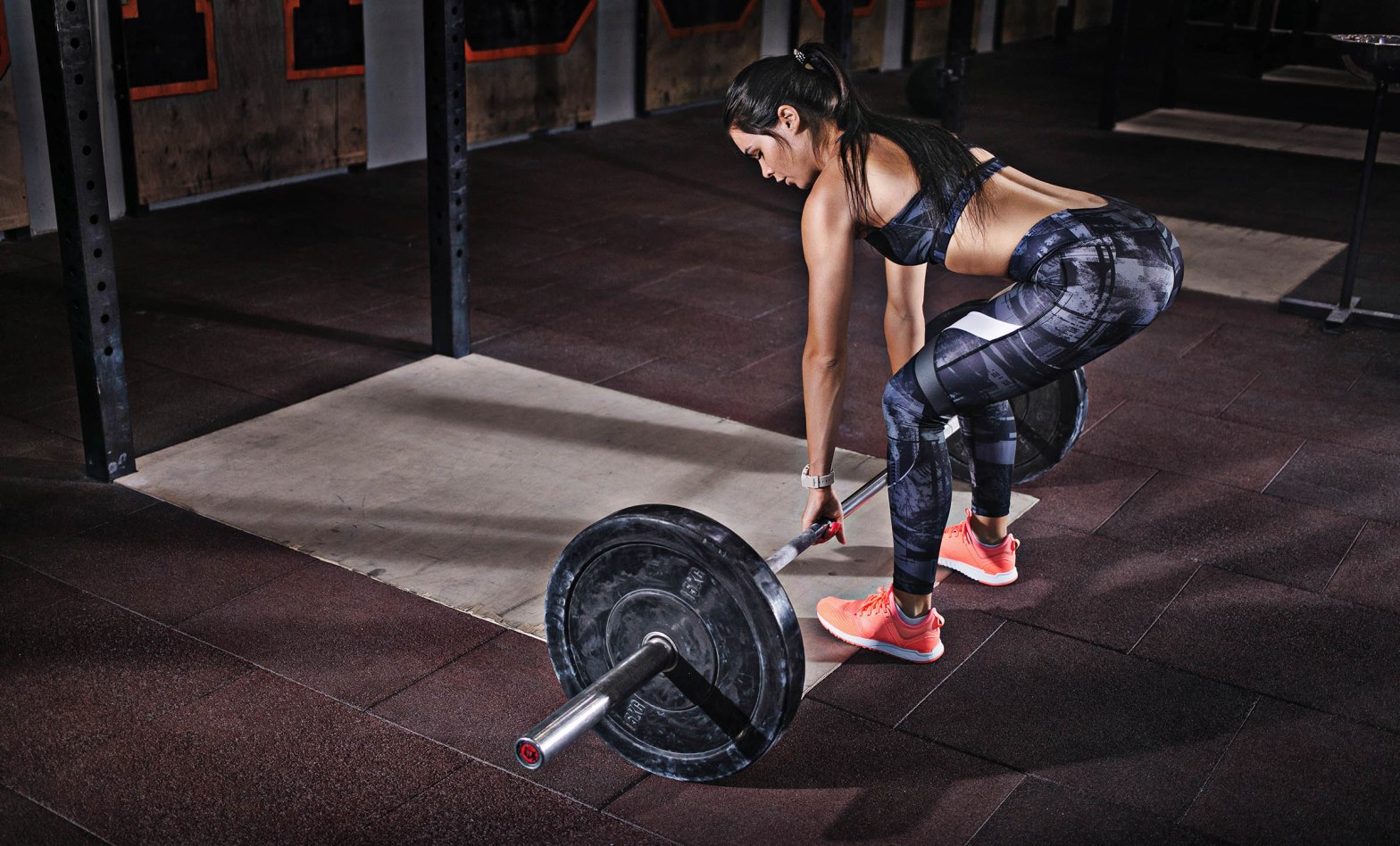
Why do so many women and men want to grow their glutes?
For some, it’s aesthetic reasons. They want a big, round, perky booty. Big butts are in!
For others, it’s functional. Your glutes are the largest muscles in your body and play a big role in exercise and movement from running to squatting to pickle ball.
This is why having strong, muscular glutes is desired by so many!
In this article I’m going to cover:
- Anatomy of the glutes
- What you need to focus on in order to grow your glutes
- Exercises to grow your glues
- How to structure your workouts
- Example workouts
Anatomy of the Gluteal Muscles
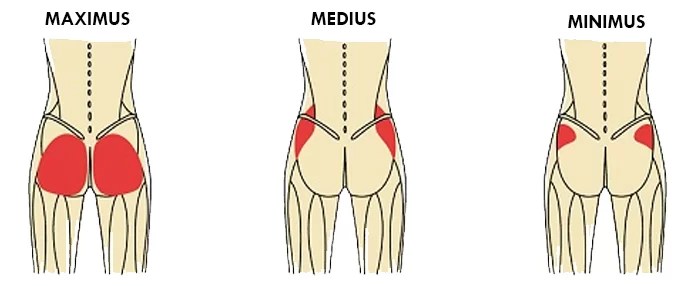
Gluteus Maximus
This is the largest muscle group of the entire body and the largest glute muscle. If you want to grow a bigger butt, this is the most impactful muscle to target. It’s more capable of growth (and most noticable) than others because it’s the largest!
The gluteus maximus is activated when the hip goes into extension (straightening the hips) as well as hip abduction (when the legs move outwards away from each other).
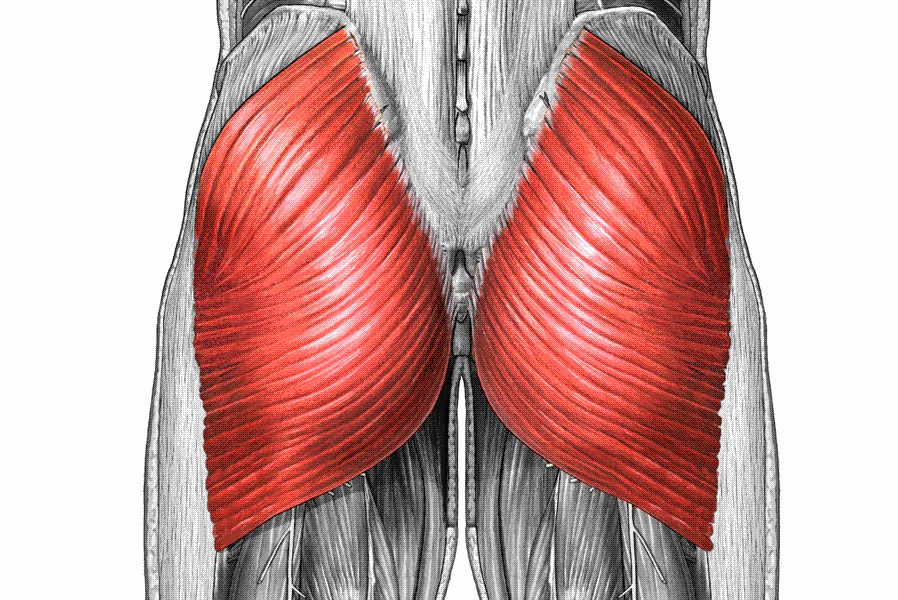
Gluteus Medius
This is a smaller muscle and lives underneath the gluteus maximus muscle. It’s responsible for hip abduction (when the legs move apart from one another).
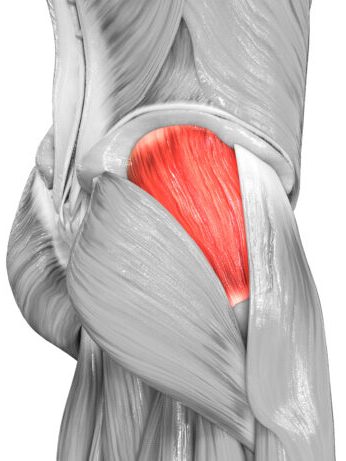
Gluteus Minimus
This is the smallest and deepest glute muscle and lives underneath the gluteus medius.
Like the gluteus medius, the gluteus minimus also helps with hip stability. It helps secure and steady the pelvis when the opposite foot is raised off the ground during running and walking.
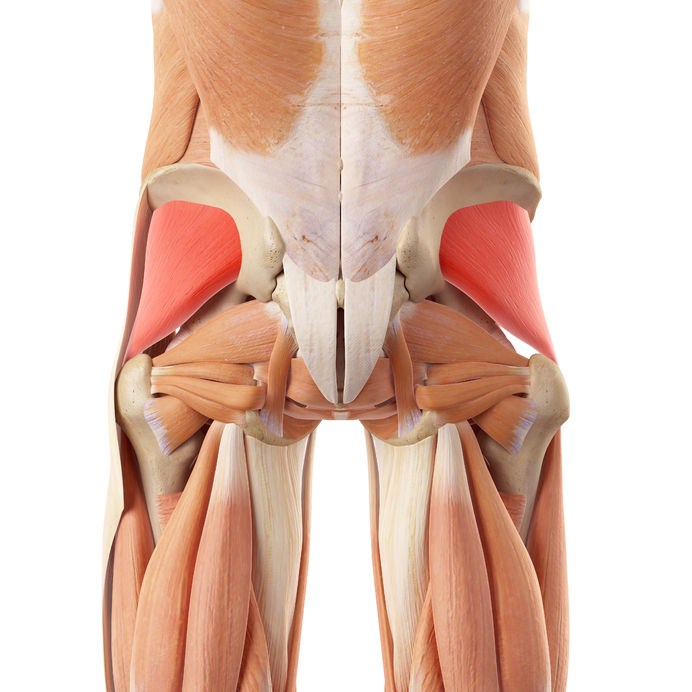
All 3 muscles work together to move your body.
What You Need To Focus On To Grow Your Glutes
Now that you have a basic understanding of the anatomy of your glutes, let’s review the 3 most important things to focus on in order to grow your glutes:
- Exercise
- Progressive Overload
- Nutrition
1. Exercise
Doing the right ones. Hint: it isn’t doing stair climber kickbacks. 😬
You want to focus your time on compound exercises. These are exercises that involve multiple joints and muscle groups. Think squats, deadlifts, hip thrusts, and lunges.
In contrast, isolation exercises involve just one joint and one muscle group. Think leg extensions, leg curls, calf raises, donkey kicks, and back extensions.

Nope
This doesn’t mean that you shouldn’t incorporate isolation exercises into your workout regime, but it does mean that the majority of your focus should be on compound movements.
I like to use the 80/20 rule. 80% of your time and energy should go into compound exercises for your glutes and 20% you can devote to isolation exercises.
2. Progressive Overload
Focus on getting stronger over time.
If you stop getting stronger, your muscles will eventually stop getting bigger.
There are several ways you can use progressive overload to get stronger. You can add weights, reps, or sets. You can also change the tempo-go slower on the eccentric, pause at the hardest part of the movement, add 1/2 reps, or pulse.
3. Nutrition
You NEED to eat enough to support glute growth.
What does this mean? You shouldn’t be in a deficit or even maintenance. You should be in a slight surplus.
What would that look like? A quick way to find out your calories surplus is to multiple your body weigh (in pounds) by 16.
Example: 140lbs x 16 = 2,240 calories per day.
This will be about a 10% increase above your maintenance calories. So if you already know how many calories you’re currently eating a day, you can just add 10% more.
You can track your weight gain and adjust as needed. A good range of weight gain would be 0.5-1% of bodyweight per week.
I know that for a lot of you, eating in a surplus might sound scary. But, in order to grow muscle, you need the extra calories to build new muscle tissue, recover, and adapt to your training. And while the scale might go up, remember that you’re gaining mostly muscle.
One of my very good friends growing up who is actually more like a second mom to me, messaged me the other week. She told me that about 15 years ago she discovered she had bone density issues. She decided to make some diet changes and also hired a trainer.
After just 2 years of implementing her plan, she gained 6% bone density!! Which is more than she would have gained on medication. She went from 110 lbs to 125 lbs, BUT, she went from a size 10 pants to size 6 pants. She lost fat and gained muscle.
I share this story to illustrate how beneficial it is to gain muscle and also how it can change your body composition. You might weight more on the scale, but appear slimmer overall with the added muscle. Don’t become so hyper-focused with the number on the scale that you lose track of your overall goal! Track measurements, photos, and how your clothes are fitting as well.
In addition to the extra calories, you need to also eat enough protein.
This will help your muscles recover, repair, and grow effectively.
Aim for at least 0.8-1 gram of protein per pound of bodyweight.
If you need help figuring out how to increase your daily protein intake, I have some tips HERE.
Exercises to Grow Your Glutes
Okay, now into the good stuff!

What are the BEST exercises to grow your glutes?
Compound exercises are optimal for growing your glutes because you can lift heavy and add weight over time as you get stronger and build muscle. I’m going to cover the top 6 compound exercises.
Barbell Back Squat
The barbell back squat is very effective for building total body strength and muscle. It’s also easy to add more weight to the bar as you get stronger so you can continue to progress. You can so variations of the squat with dumbbells or kettlebells, but keep in mind that it can be challenging to hold onto heavier dumbbells over time as you get stronger. And remember, you want to be able to increase the weight over time so you can grow the muscle!
Tip: to target your glutes even more, use a slightly wider stance.
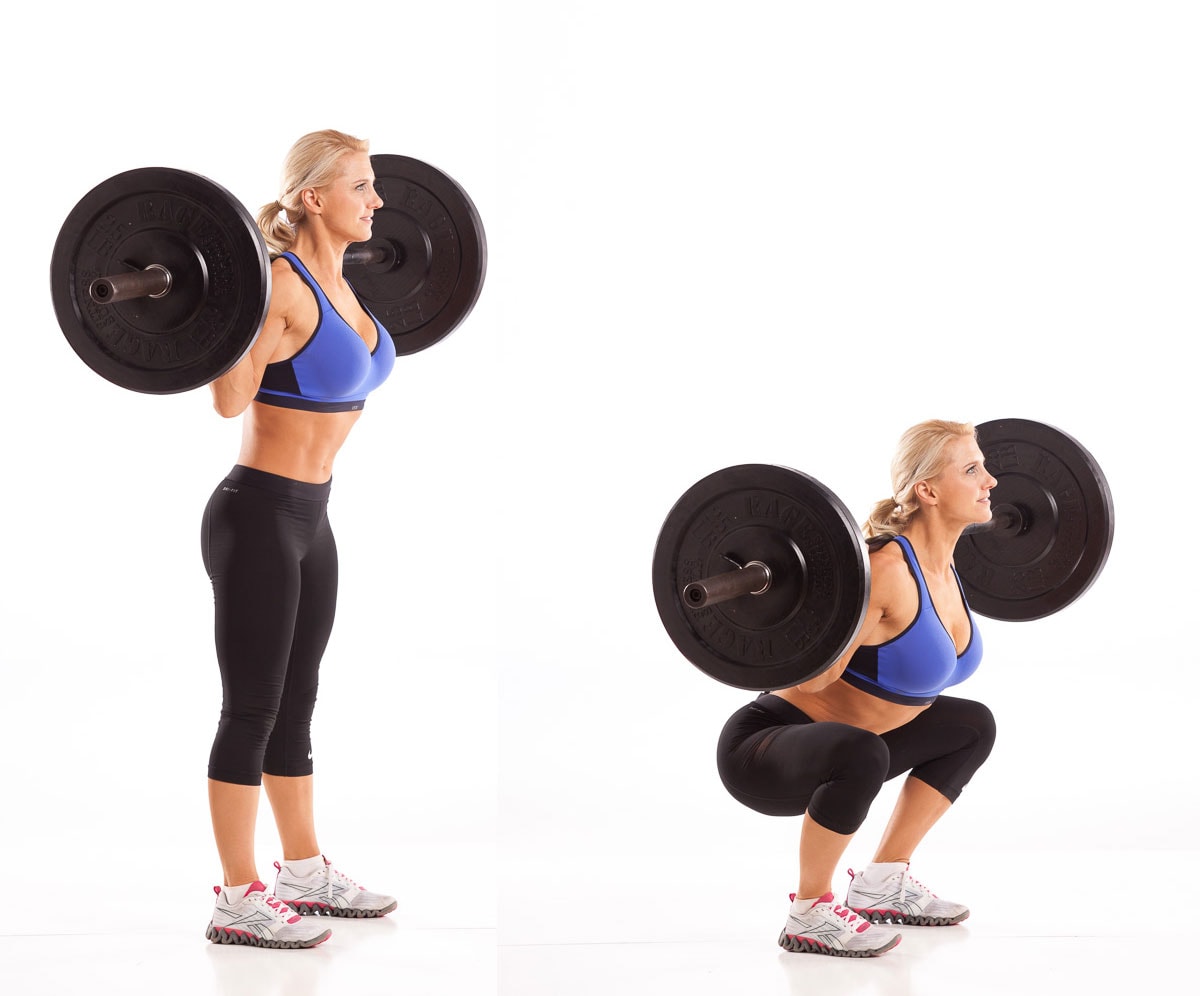
How to:
- Set up the barbell in the squat rack so it’s at about the height of your breastbone.
- Step under the bar, bring your shoulder blades together, and rest the bar above the bony ridges on the bottom of your shoulder blades.
- Lift the bard out of the rack, take one or two steps backward, and place your feet a little wider than shoulder-width apart with your toes pointing slightly outward.
- Sit down and remember to keep your back straight and push your knees out in the same directions as your toes throughout each rep.
- Stand up and return to the starting position.
Barbell Deadlift
The deadlift is an amazing exercise that trains the posterior chain (the muscles on the back side of your body, hey glutes! 👋 ).
You can use a barbell, dumbbells, kettlebells, or trap bar.
Fun fact, I went through an intensive 8 week physical therapy rehab for a pelvic injury a few years ago (thanks to having babies and running too much) and the number one exercise my brilliant PT had me focus on to strengthen my glutes was DEADLIFTS! It was and still is my favorite exercise for my glutes.
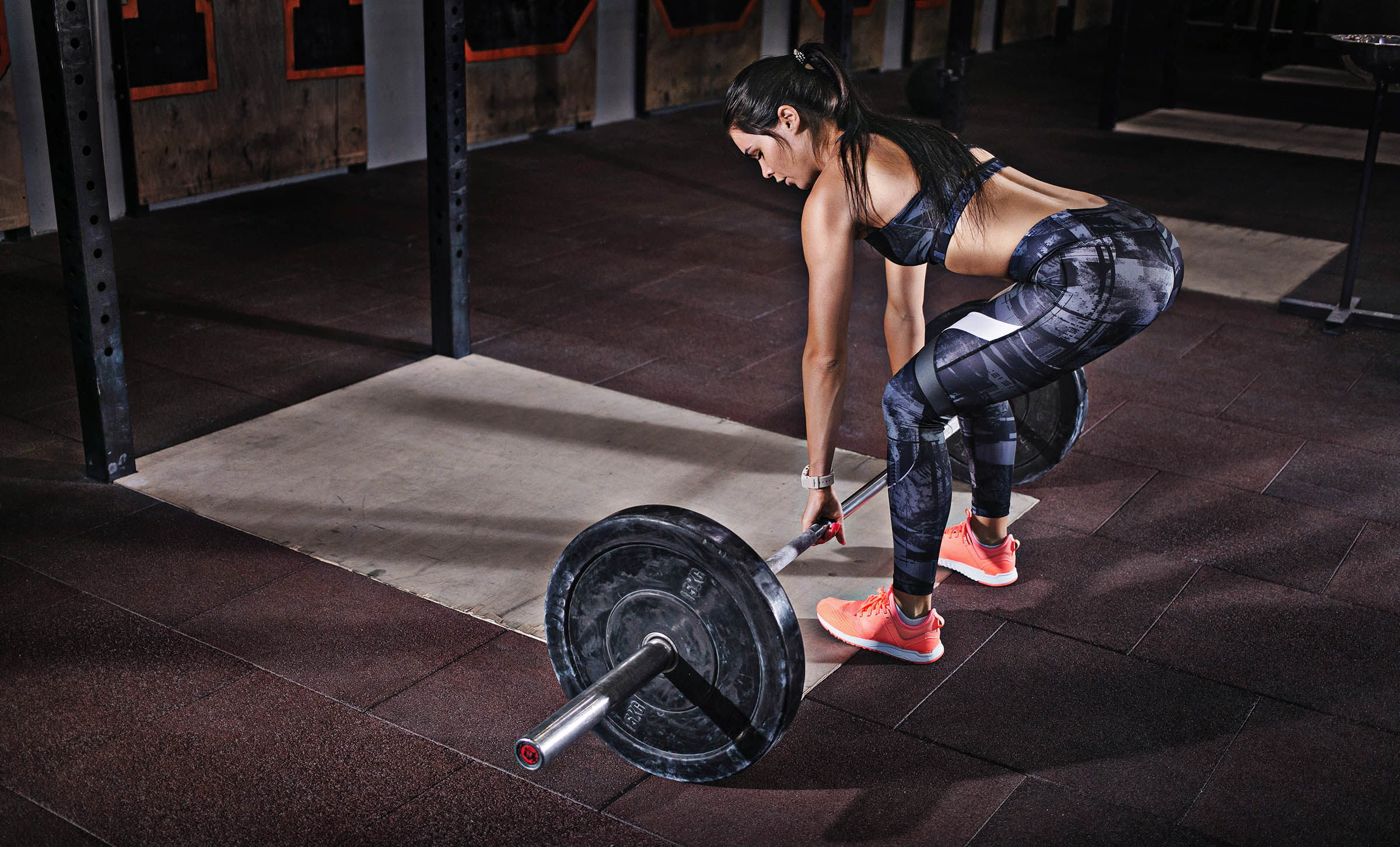
How to:
- Position your feet so they’re slightly narrower than shoulder-width apart with your toes pointed slightly out. Move a loaded barbell over your midfoot so it’s about an inch from your shins.
- Take a deep breath into your belly, then place your hands on the bar just outside your shins.
- Flatten your back and drive your body upward and slightly back by pushing through your heels until you’re standing up straight.
- Reverse the movement and return to the starting position.
Hip Thrust
The barbell hip thrust forces your glutes to work hard throughout the entire range of motion.
I also like incorporating the single leg option because they are super challenging and take a lot less set-up as opposed to the barbell hip thrust.
Another thing to note is that the most challenging portion of the hip thrust is at the top of the movement when the glutes are flexed. The most challenging part of the squat is at the bottom of the movement when the glutes are stretched. These 2 exercises are a dynamic duo for glute growth!
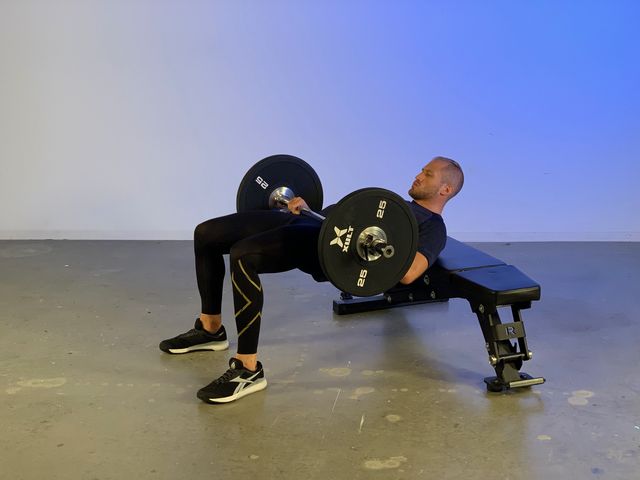
How to:
- Sit on the ground with your back resting against a bench. The bench should be perpendicular to your body and your shoulders should be resting on the middle of the bench.
- Roll a barbell over your thighs so that it sits in your hip crease (use a bar pad to protect your hip bones from bruising and make the exercise more comfortable).
- Plant your feet on the ground about shoulder-width apart with your toes pointing slightly outward and bend your knees to 90 degrees.
- Push the bar upward with your hips by pressing through your heels until your upper body and thighs are parallel to the ground and your shins are vertical.
- Reverse the movement and return to the starting position.Holding a dumbbell in each hand, stand up straight with both feet about shoulder-width apart.
Romanian Deadlift (RDL)
The RDL also trains the posterior chain similar to the deadlift. The RDL puts a larger emphasis on the hamstrings and glutes. You can also do this movement with dumbbells or kettlebells.
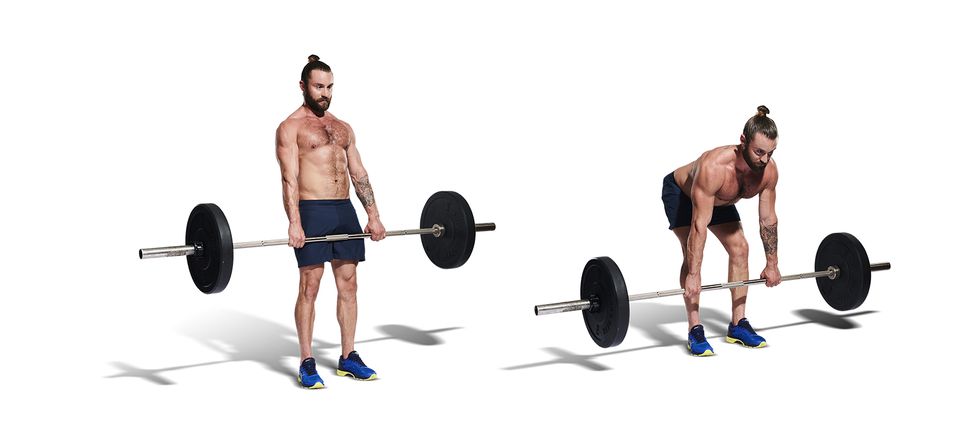
How to:
- Stand up straight holding a loaded barbell with a shoulder-width, overhand grip (palms facing toward your body).
- Flatten your back and lower the weights toward the floor in a straight line while keeping your legs mostly straight, sending your butt back to the wall behind you.
- Bend your knees slightly. Once you feel a stretch in your hamstrings, pause and reverse the movement to starting position
Dumbbell Lunge
Lunges are great for building glutes and training your whole lower body. They challenge and train your stabilizing muscles because you have to have balance and coordination, especially if you’re doing the walking lunge version. The reverse, walking, and curtsy lunges are all great for targeting the glutes.
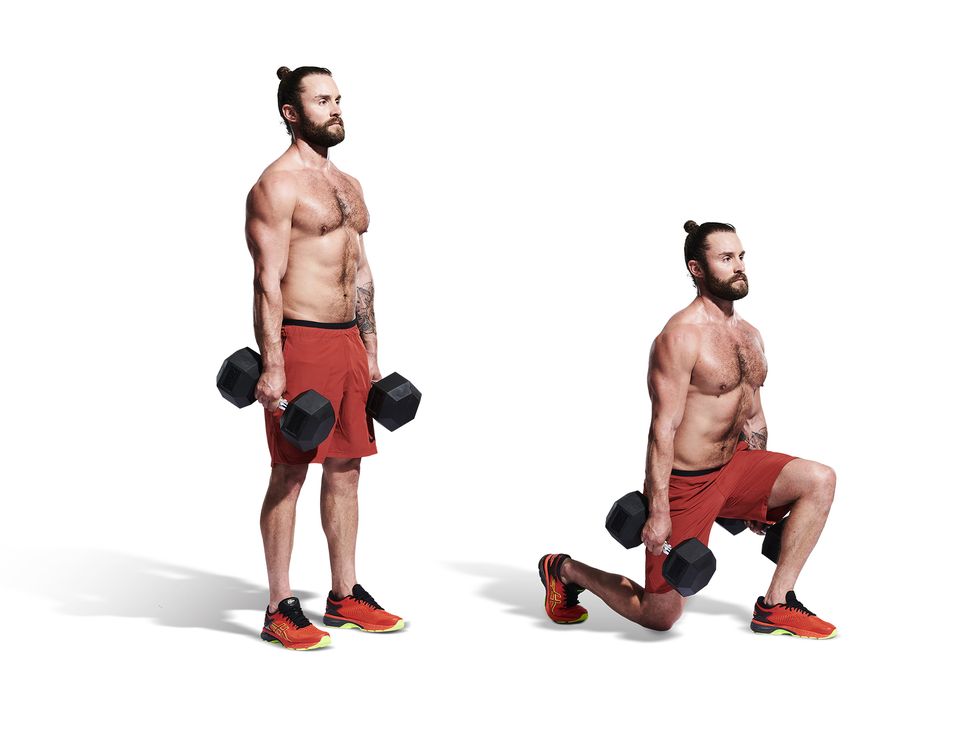
How to (reverse lunge):
- Stand with feet hip-width apart, then step backwards with your right leg until your knees are at 90-degree angles – your right knee should be pointing towards the ground, your right knee should be in line with your toes.
- Push yourself forward to the start position and repeat with your left leg.
- Repeat for the required amount of reps.
How to (walking lunge):
- Stand tall with feet about shoulder-width apart. You can rest your hands on your hips.
- Brace your core and take a big step forward with one leg and bend your front knee till your thigh is parallel with the floor. You back leg should be bent, with your shin parallel to the floor.
- Extend your front leg to come to standing, taking the back leg up and over into a forward lunge.
- Repeat for however many reps required.
How to (curtsy lunge):
- Stand with your feet at roughly shoulder-width apart. You can place your hands on either side of your hip.
- Brace your core and step your right foot back and across, as if curtsying to someone, with the ball of your right foot touching the ground and heel off the floor.
- Lower your front thigh till it is roughly parallel to the ground.
- Push back up to standing by extending your left leg.
- Perform however many reps you have planned and repeat with the other leg.
Bulgarian Split Squat
Oh boy. Most have a love/hate relationship with bulgarian split squats! They are killer! I love these these because it doesn’t take a lot of weight to make these super challenging!
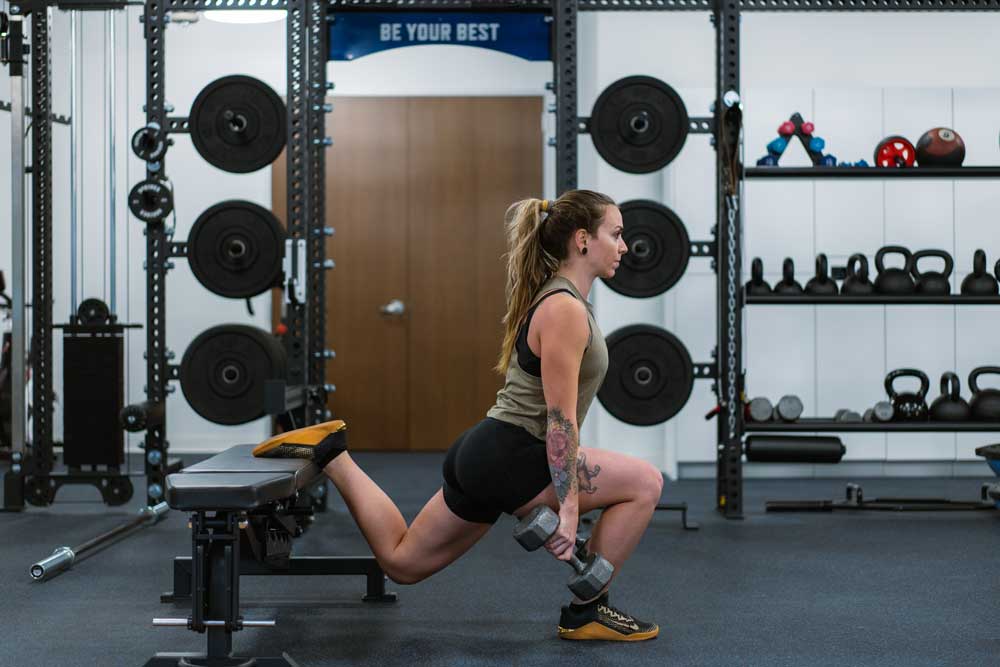
How to:
- While holding a dumbbell in each hand, stand about two-to-three feet in front of a bench. The distance will vary per person. Click HERE for tips on how to find the best stance for you.
- With your right foot (and heel in particular) firmly planted, place the top of your left foot on the bench behind you.
- Look at a spot on the floor six-to-ten feet in front of you and lower your butt toward the floor by bending at your right knee.
- Keep lowering yourself until your right thigh is roughly parallel with the floor.
- Stand up and return to the starting position.
How to Structure Your Workouts
There’s a few different ways you can structure your weekly workouts:
Example: 2x per week for 14 sets total
- Monday: main exercises – 1) Hip Thrust 4 x 8 reps and 2) Squats 3×12
- Thursday: main exercises – 1) Sumo Deadlift 4×5 and 2) Hip Thrust 3×12
Example: 3x per week for total of 18 sets
- Monday: main exercises – 1) hip thrust 3×10 and 2) squats 3×12
- Wednesday: main exercises – 1) sumo deadlift 3×6 and 2) hip thrust 3×12
- Friday: main exercises – 1) walking db lunges and 2) 3×10 kb squats 3×15
Aim to work your glutes 2-3 times a week for the best results and depending on your experience, 10-20 working sets per week.
As for number of reps, this can vary per exercise and per phase. Here are 3 examples of how you can vary your reps per workout, routine, or per month:
Example 1: Varying Reps Per Workout
| Barbell Deadlift | 3 sets of 4-6 reps |
| Sumo RDL | 3 sets of 6-12 reps |
| Reverse DB Lunge | 3 sets of 6-12 reps |
| Side Lying Hip Raise | 2 sets of 12-15 reps |
Example 2: Varying Reps Per Routine
| Lower Body | lower reps |
| Upper Body | lower reps |
| Lower Body | higher reps |
| Upper Body | higher reps |
Example 3: Varying Reps Per Month
| Month 1 | lower reps, higher weight |
| Month 2 | moderate rep range, moderate weight |
| Month 3 | higher rep range, lower weight |
You could also apply this recommendation:
- 15% to 20% of sets: 2 to 6 rep range
- 15% to 20% of sets: 12 to 15+ rep range
- 60% to 70% of sets: 6 to 12 rep range
The main thing is, you want to lift heavier more weight over time with each workout, but you also don’t want to overtrain to a point where you’re not getting adequate rest and recovery. For example, you don’t want to do too many sets per workout, taking each set to failure. More isn’t always better!

Instead, end most of your sets should be about 1-2 reps shy of failure.
Sample Workouts
If this is all overwhelming to you, that’s okay! I got you! Here are 5 example workouts you can start off with:
Grow Your Glutes Workout #1
| EXERCISE | SETS | REPS | REST |
| Barbell Back Squat | 3 | 4-6 | 3 min |
| DB Sumo RDL | 3 | 8-10 | 2-3 min |
| DB Reverse Lunge | 3 | 12 | 2 min |
| Standing Cable Hip Abductions | 3 | 12/side | 90 sec |
Grow Your Glutes Workout #2:
| EXERCISE | SETS | REPS | REST |
| Bulgarian Split Squat | 3 | 4-6/side | 3 min |
| Barbell Hip Thrust | 3 | 8-10 | 2-3 min |
| DB Reverse Lunge | 3 | 12 | 2 min |
| Cable Kickbacks | 3 | 12/side | 90 sec |
Grow Your Glutes Workout #3:
| EXERCISE | SETS | REPS | REST |
| Sumo Deadlift | 3 | 4-6 | 3 min |
| Single Leg Hip Thrust | 3 | 8-10/side | 2-3 min |
| Side Lying Hip Raise | 3 | 12/side | 2 min |
Grow Your Glutes Workout #4
| EXERCISE | SETS | REPS | REST |
| Barbell Back Squat | 3 | 4-6 | 3 min |
| Pause Barbell Hip Thrust (pause 3 sec at the top) | 3 | 8-10 | 2-3 min |
| Curtsy Lunge | 3 | 8/side | 2 min |
| 1.5 DB RDL | 3 | 8 | 90 sec |
Grow Your Glutes Workout #5
| EXERCISE | SETS | REPS | REST |
| Barbell Deadlift | 3 | 4-6 | 3 min |
| Barbell Lunges | 3 | 8/side | 2-3 min |
| 1.5 Single Leg Hip Thrust | 3 | 8/side | 2 min |
| Seated Hip Abduction Machine | 3 | 15-20 | 90 sec |
If you have any questions about these exercises or workouts, don’t hesitate to reach out: christyewingfitness@gmail.com
Also, if you aren’t already on my email list, sign up now! I’m launching a big discount for my 1:1 coaching program soon and it goes out to my email list first. So if you want someone to take away the guesswork and do all the work of building a program that fits your schedule, your equipment availability, and your goals, sign up now!
I hope this helps! Good luck in growing those glutes! 🍑
-Christy
 CHRISTY EWING FITNESS