
There is so much information out there on how to lose weight. It can feel overwhelming and confusing. There’s keto, intermittent fasting, whole 30, paleo, carnivore, low fat, low carb, weight watchers, etc. Which one is the best?
My goal is to simply everything so by the end of this article, you know exactly what to do in order to lose body fat.
First, let’s talk about losing weight vs. losing body fat.
When people say they want to lose weight, they really mean they want to lose body fat. You can lose weight by losing fat and muscle or you can lose mainly body fat and maintain muscle. Option 2 is definitely ideal! I mention this because later in the article I’m going to discuss how to track your progress. The scale weight is NOT the only way to determine progress. You can lose fat and gain muscle and the scale weight can stay the same.
Alrighty, let’s get into it!
Step 1: Nutrition
Calories
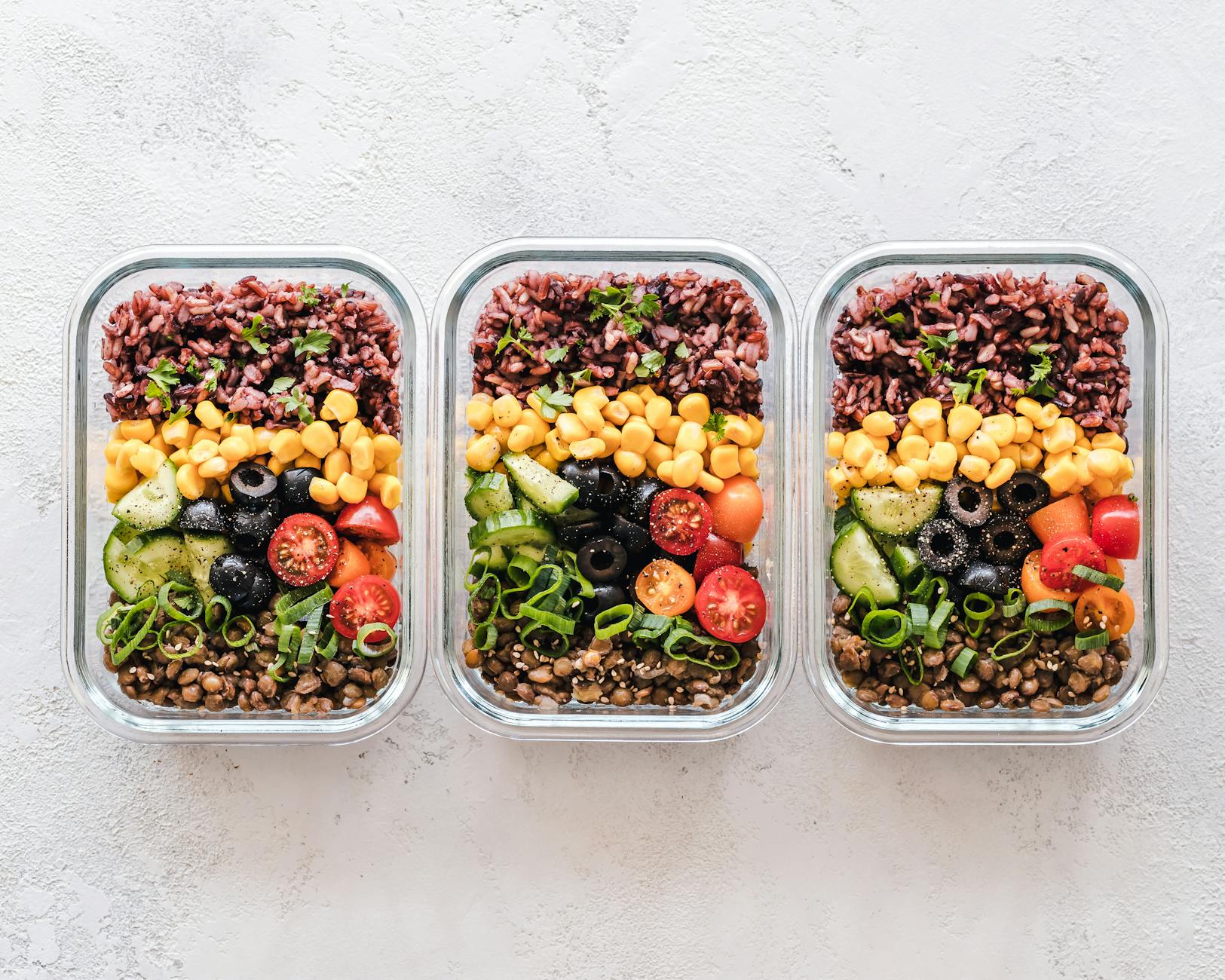
In order to lose body fat, you need to be in a calorie deficit. A calorie is a unit of measure used to show the energy content of food.
A calorie deficit is another way of saying that you’re eating less calories than your body is burning throughout the day. In other words, you’re putting yourself in an energy deficit.
To lose weight –> Eat in a calorie deficit
To maintain weight –> Eat maintenance calories
To gain weight –> Eat in a calorie surplus
You might have a friend, co-worker, or family member who lost weight doing keto, carnivore, intermittent fasting, weight watchers, whole30, or some other fancy diet and they SWEAR by it. It worked for them, but will it work for you?
Each of those diets can work if they put you in an overall calorie deficit. For example, keto cuts out almost a whole macronutrient-carbs-so you might naturally eat less calories and lose fat. Intermittent fasting shortens the window of eating so you might end up eating less calories and lose fat. However, there isn’t anything magical about these diets. They can help put you in a calorie deficit. If you love carbs or love breakfast, don’t do these diets!
With any diet you need to ask yourself if you can maintain this for the rest of your life. If you can’t, DON’T DO IT! You might lose weight initially but as soon as you stop your diet, you’ll likely gain the weight back.
The best way is to put yourself in a moderate calorie deficit. I like doing this because it’s much more sustainable. You can figure out how to enjoy your favorite foods in moderation. You don’t need to be overly restrictive or cut out whole food groups.
You can learn how to incorporate everything in moderation and work on adding more nutrient dense foods into your diet. You won’t always be in a cut.
Eventually you will move back into maintenance, but you can continue eating how you normally would, just slightly more calories.
How to Determine Your Calorie Deficit

So how do we determine what a calorie deficit looks like for you?
Step 1: Figure out your goal body weight. Make sure it’s realistic. It’s a weight that you feel most comfortable at.
Step 2: Next, multiply your goal body weight by 12. Those are your daily calories.
example: 140lbs x 12 = 1,680 calories per day
I like to give a range so there’s less pressure to hit an exact number. In the above example, I’d set my calorie range for 1,580 – 1,780 calories per day.
Some days you’ll be on the upper end of calories and some days you might be on the lower end. You can add your daily calories up for the week and divide by 7 to be sure you’re in the correct calorie range each week.
For example, 1,680 x 7 = 11,760 calories each week
The goal is to hit your daily calorie target as consistently as you can. Shoot for 80-90% consistency.
That means in a 30 day month you should hit 1,680 calories/day 24-27 days.
This gives you some wiggle room to enjoy a night out, birthday party, dinner with the in-laws, etc.
Counting Calories
Calorie counting is tracking the calories in the foods and drinks you’re consuming to help determine how many calories you’re eating each day.
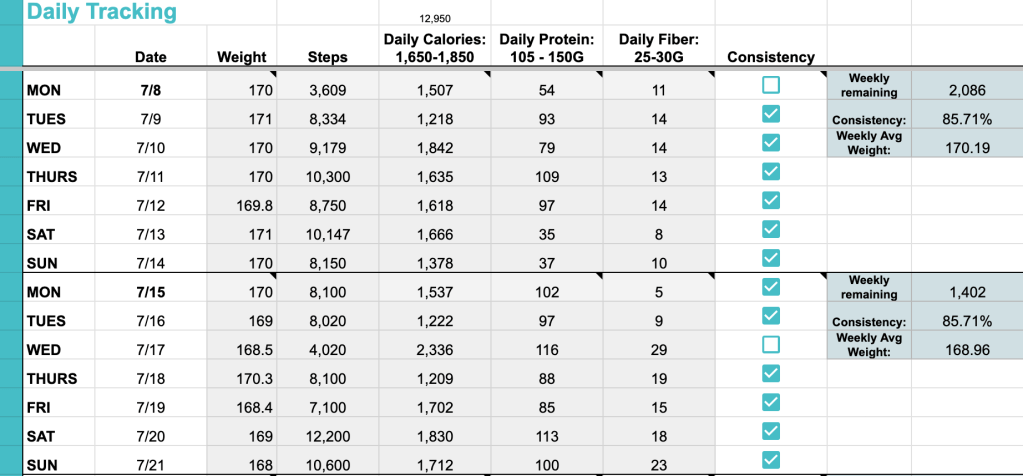
Think of it like having a budget for your finances. You have a set amount of money (calories) you can spend each day. In order to stay within budget, you would need to track how much money you spend (calories consumed) on each item (food) and add it up each day.
By tracking your spending (calories), you’ll get a really clear picture if you’re in your budget (calorie deficit) or not. It’s the most accurate way to determine if you are in a calorie deficit.
With calorie counting, you can learn how to enjoy all foods in moderation. No food/drink is completely off limits. Through this process, you’ll learn that some foods are more calorie-dense than others and don’t fill you up as much. You’ll learn that some foods fill you up better than others.
Calorie counting will teach you more about the foods you’re already eating and how best to “spend” your calories to ensure you’re hitting your calorie deficit target.
Protein

Eating enough protein is super important when you’re in a fat loss phase. Here are 3 reasons why:
- When you’re in a calorie deficit, you’re going to be more hungry than normal, but you shouldn’t be starving. Eating adequate amounts of protein daily will help you feel more full and stay more full longer after each meal. This will help make the calorie deficit more manageable. You’ll feel less hungry, more satisfied, and satiated which will help you be more consistent.
- Protein will also be super important for maintaining your muscle mass. Remember, we want to lose body fat and keep as much muscle as possible. Protein builds, sustains, and repairs your muscles. Having muscle slightly elevates your metabolism, but it also gives you energy and helps you be more active, which will affect your metabolism in the end.
- Protein also has the highest thermic effect of food, which means that your body is burning more calories to process, absorb, and digest.
Volume Foods
Volume foods are foods that you can eat a lot of for very few calories. They’re generally more full of fiber and water and will help keep you full for longer.

Salad is a great example of this. 2 cups of spinach is only 20 calories. That’s a lot of spinach that will fill your stomach up with food for very few calories. Toss in some other veggies and a protein source and you have a very filling meal.Here are some other examples:
- Watermelon. 1lbs=150 calories
- Strawberries. 1lb=140 calories
- Cauliflower rice
- Boiled potatoes
- Greek yogurt
- Cottage cheese
- Oatmeal
- Egg whites
- Broccoli
- Peppers
- So many others. Most veggies and fruits fall into this category.
I’m not saying to ONLY eat volume foods, but I’d recommend adding at least 1 volume food to every meal. Choose mostly nutrient dense foods. But, it’s okay to include other foods you love as well in moderation.
These foods will help you stay full and satisfied throughout the day so you aren’t constantly hungry which can make it difficult to stick to your deficit!
How to Track
Step 2: Physical Activity
Steps

There are 4 ways that your body burns calories:
- 70% BMR – This is how many calories your body burns while at rest if you just laid in bed all day.
- 15% NEAT – This is all of the extraneous movement you get throughout the day that isn’t dedicated exercise. Things like walking, typing, fidgeting, etc.
- 10% TEF – This is how many calories your body burns as it digests your food.
- 5% EAT – This is calories burned from exercise. Side note, it’s only FIVE percent. Another important reason to not worry about how many calories you burn during your workouts.
With that said, if you want to make your deficit easier, you can increase your NEAT by walking. This will help you burn more calories per day. You’ll increase your overall energy expenditure and help yourself get into a calorie deficit. Aim for 7-10k steps a day. If your steps are currently very low, start where you’re at and gradually work your way up to this. Find little ways you can increase your steps throughout the day.
Cardio
The #1 factor for fat loss is being in a calorie deficit. As long as you’re eating in a calorie deficit you’ll lose fat. Exercise accounts for about 5% of your total calories burned each day. It’s not a lot! So, is cardio useless?
N0! Cardio has a ton of benefits. The American heart association recommends 150 minutes/week of moderate intensity aerobic exercise. This could be a brisk walk, jog, bike ride, swim, etc. Cardio is important for cardiovascular health and I find it very helpful for mental health too!

Cardio can’t make up for a poor diet though. The best and easiest way to make sure you’re in a calorie deficit is to control in with your nutrition. Do cardio for the health benefits, not to burn calories. Also, be aware that doing A TON of cardio can increase your hunger making it harder to stay in a deficit.
Strength Training
Aim to strength train 2-4x each week with a focus on getting STRONG. When you lift weights and work on building muscle, this can help boost your metabolism. Your body burns slightly more calories with more muscle compared to body fat, but I think that it helps boost your metabolism even more because when you have more muscle you feel better. You move your body more. You’re more capable and strong.

Another huge benefit of strength training is the mental benefit. It gives you something to focus on other than the scale moving down.
It’s also cool to see yourself getting stronger, improving your form, and learning new exercises. I had a client tell me recently that she feels so much stronger and is able to keep up with her kids a lot more. That is huge! It’ll also give you a more defined and “toned” look which is what a lot of people are looking for.
Step 3: Some Other Stuff
Sleep
Sleeping less than 8 hours a night has been linked to lower leptin levels and higher ghrelin. These are 2 opposing hormones in appetite regulation.The differences in these 2 hormones caused by shorter sleep times will lead to an increase in appetite and hunger. Basically, when you’re getting less quality sleep, your appetite increase and so do your cravings.
If you’re eating nutrient-dense foods and enough protein and you’re still hungry all the time, take a look at your sleep quality. I have all my clients rate their sleep quality on a scale of 1 to 10 every week. Now, I know 8 hours a night isn’t possible for everyone, especially new moms and dads. Remember that this is a phase and it will pass. Really evaluate if this is the best time to be in a deficit.
Tracking Your Progress
Track your weight daily, take measurements every 2 weeks, and progress photos every 4 weeks. This will help you have a lot of data to see the progress you’re making. The scale alone will not tell the whole story!!
Your weight will fluctuate daily. Take the average weekly weight and compare month 1 week 1 with month 2 week 1 and so on.
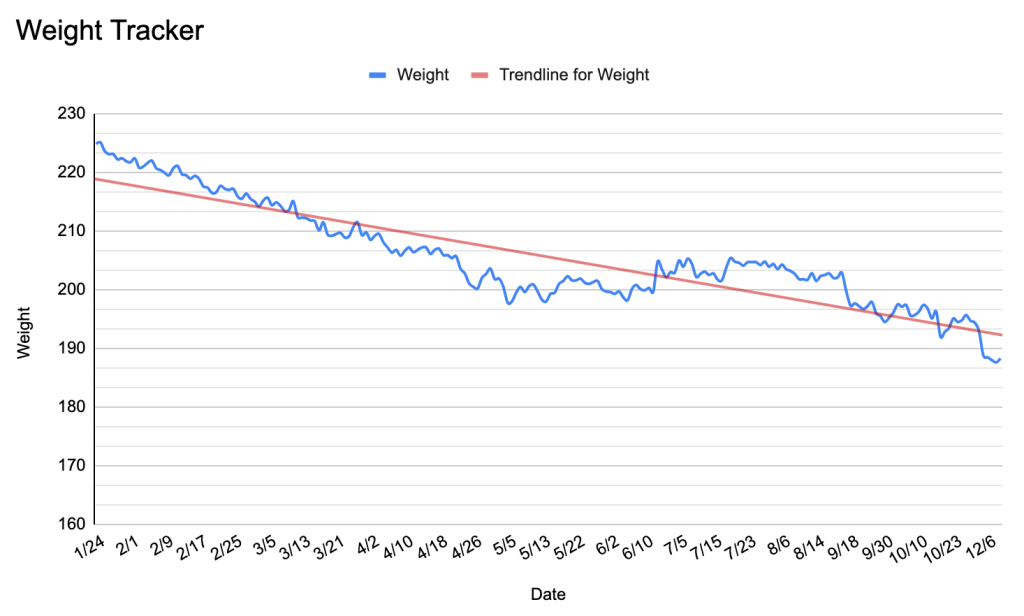
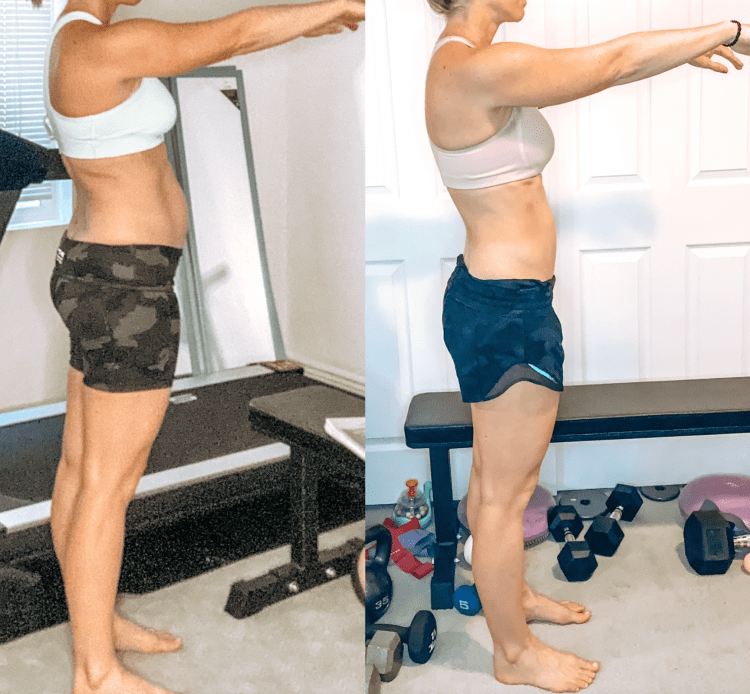

Also be sure to take note of “non-scale” wins. Things like how strong you’re getting in the gym. How your sleep is improving. How much more disciplined you feel. How your clothes are fitting. How much more energy you have, etc.
Track as much as possible so you can have more data to know if what you’re doing is working. Give your plan AT LEAST 4 weeks before you change anything.
Consistency and Flexibility
Consistency doesn’t mean being perfect.
Things are not going to go as planned during this journey. You’re going to have obstacles that might prevent you from getting your workout in or from hitting your protein target. Be flexible and know that perfection is not required to make progress.
Maybe you had a meeting go long so instead of getting 60 minutes to workout, you take a 20 minute walk. Maybe you have a date night coming up for your anniversary so you choose to not track calories, enjoy the night, and then get back on track the next morning!
Consistency means that you showed up for 24 out of the 30 day month.
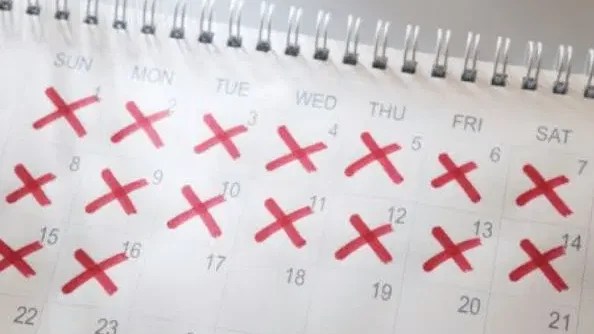
You could have the perfect program, but if you aren’t consistent, it’s going to take a lot longer to get the results you’re looking for. I have my clients aim for 80% consistency each month.
That means you show up for 24 days out of the month.
I don’t want you to be 100% perfect because that means you’re probably being too strict and rigid which could lead to burnout. Being 80% consistent means you have some wiggle room to enjoy a night out, celebrate someone’s birthday, have unexpected things like illness or whatever might prevent you from hitting your calories.
When you do go “off track”, know this: you’re just 1 meal, 1 day, 1 decision away from getting back on track. DON’T GIVE UP!!!
Summary
Sustainable fat loss TAKES TIME. A long time.
You didn’t gain the fat in 1 month so don’t expect to lose it in 1 month. Set some realistic expectations so you’re prepared to be in this for the long haul.
If you follow the steps in this guide consistently, you will begin to see results.
- Moderate Calorie Deficit
- Prioritize Protein
- Include Volume Foods
- Steps/Cardio
- Strength Training
- Sleep
- Track Your Progress
- Consistency and Flexibility
Lastly, if you want 6 weeks of free workouts, download a PDF of this guide that includes workouts and more tips HERE.
And if you want more specific help, accountability, and support, learn more about 1:1 coaching here:
Hope this helps!
-Christy
 CHRISTY EWING FITNESS